

Should You Consider Switching to Synthetic Oil?

Whether you had your oil changed here at Buick GMC of Rochester or somewhere else, you are asked the same question: Synthetic or conventional? And you have probably asked yourself: Should I go with synthetic? Is there really an advantage? Let’s find out.
Like other petroleum products, conventional – also known as “mineral” – motor oil is refined from crude oil through the processes of separation, conversion, and treatment. Distilled crude is also the basis of most synthetic oil (Pennzoil makes theirs from natural gas), but it is created in a lab where it is broken down to a molecular level and then rebuilt of artificially made chemical compounds.
When put under a microscope, mineral motor oil reveals molecules of different shapes, sizes, and structures. In contrast, synthetic oil shows molecules of nearly identical size and structure. There are several different kinds of synthetic oils, but most of the motor oils belong to a group known as polyalphaolefins (PAOs). All further references to “synthetic oil” in this article refer to PAOs. There are also synthetic blends that combine minerals and synthetics, but for the purposes of clarity, this article will focus on full synthetics.
Although synthetic oil was first used only in high-performance vehicles and even jet engines, over the past few decades, it has found application in more mainstream engines. Turbocharged engines, in particular, have increased interest in synthetics. And as of 2016, 70% of new cars are filled with synthetic oil.
Synthetic Oil Advantages
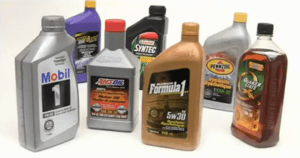
A highly respected study comparing synthetic and mineral oil conducted by the American Automobile Association had this to say:
“Oil protects critical engine components from damage and AAA found that synthetic engine oils performed an average of 47 percent better than conventional oils in a variety of industry-standard tests,” said John Nielsen, AAA’s managing director of Automotive Engineering and Repair. “With its superior resistance to deterioration, AAA’s findings indicate that synthetic oil is particularly beneficial to newer vehicles with turbo-charged engines and for vehicles that frequently drive in stop-and-go traffic, tow heavy loads or operate in extreme hot or cold conditions.” Here are some specific synthetic oil advantages:
- Greater Engine Protection
Your car’s engine parts move at high speeds and are in constant contact with one another. Your motor oil is the only thing preventing those moving parts from wearing down. Unlike mineral oils, fully synthetic oils won’t break down and will protect your engine for longer—sometimes as much as 250,000 miles. - Cleaner Engine
As motor oil circulates through your vehicle’s engine, impurities in the oil connect with picked-up debris, forming deposits. These deposits form sludge over time, reducing your engine’s efficiency and lifespan. Full synthetic oils contain very few impurities and almost eliminate deposit formation. The composition of synthetic oil also allows it to contain a greater amount of engine cleaning additives. - More Stable Viscosity
Synthetic oils maintain their viscosity better than conventional oil as temperatures rise and fall, protecting your engine with more consistency. In Minnesota, the obvious issue is extreme cold, and certain synthetics have been able to handle cold starts with no cranking or oil pressure problems in as low as -40°F. - Towing and High Loads
Slow speed, high payload, towing, and long hills, are all cases where mineral oil films become extremely thin, resulting in higher wear rates. The advantage of synthetics and their consistent viscosity is at its highest in these situations. - Longer Lasting
Because it stays cleaner and is significantly less likely to break down under high temperatures, synthetic oil maintains its original integrity longer than conventional oil. If you are likely to wait until 10,000 miles between changes, which is at the upper end of both Buick’s and GMC’s recommendation, synthetics are likely to be better performing at the end of the period. Remember a better quality oil filter should accompany longer oil change intervals. - Turbocharger Protection
Powered by freshly ignited exhaust, turbochargers and related components operate at high levels of heat, which challenges motor oil. Being more heat resistant, synthetic oil can be more effective in protecting turbocharged engines
Synthetic Oil Disadvantages
- Higher Cost
 Synthetic oil can cost up to twice as much as conventional oil. Unless you stretch your oil changes beyond manufacturer recommendations, the overall cost of oil changes will be higher.
As indicated by the fact that most cars start out with synthetic oil now, there is no truth to the myth that once you have synthetic oil in your engine, you never go back to mineral oil. It is perfectly safe to switch between or mix synthetic and conventional oil at any time.
So synthetics are indeed better motor oil than mineral oil. You will have to decide if it is worth it to you. Obviously, the better cold starting is plus in these parts, but otherwise, if you tend to trade your car every few years, you will be less concerned about how long the engine lasts. If this is a car you plan to keep long-term and maybe even pass down through the family, using synthetic is probably a good bet.
One last point, the AAA study also included a survey that found that 83 percent of auto mechanics select synthetic oil for their personal vehicles. If you still have questions regarding synthetic oil for your Buick or GMC model, contact one of our Buick GMC of Rochester service representatives for more detailed advice.
0 comment(s) so far on Should You Consider Switching to Synthetic Oil?